

Arrest Them All? No , That Means Anyone and Everyone
This happened.
At 1:00 a.m. on the Las Vegas Strip.
I was watching it unfold from the comfort of my hotel room, having walked past that exact spot just minutes before things went sideways. Same pavement. Same performers. Same late-night Vegas energy.
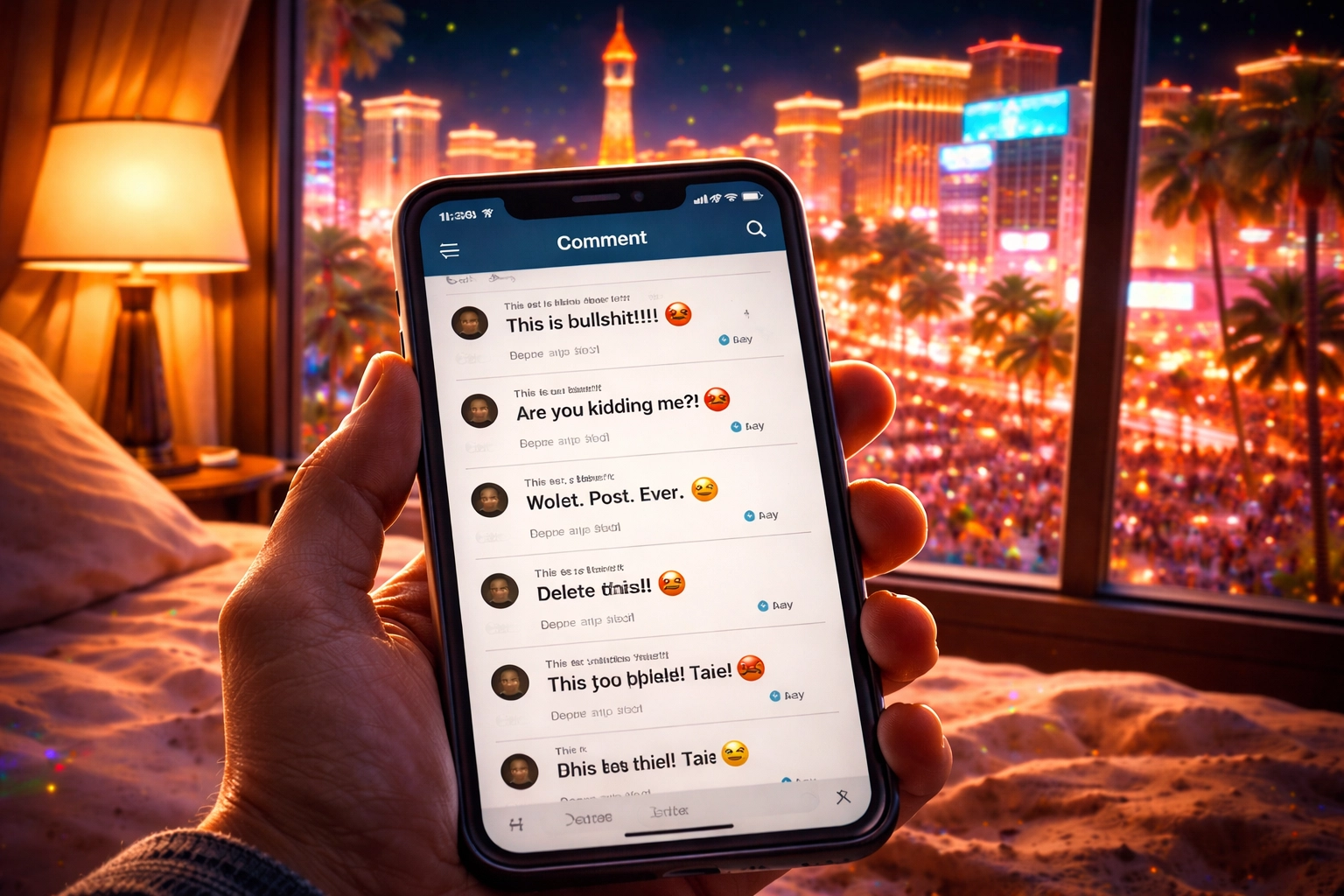
And then I made the mistake of opening the comments.
The Comment Section Lost Its Mind
"Get rid of the street performers."
"Arrest them all."
"It's paid agitators."
"Bring out the water cannons."
And I found myself asking: What the hell are people thinking?
This is where internet outrage becomes genuinely dangerous. Not because people are angry, anger is sometimes appropriate. But because the leap from "something bad happened" to "suspend everyone's rights" happens so fast that nobody stops to think about what they're actually asking for.
Water cannons. Mass arrests. Collective punishment.
These aren't solutions. They're fantasies dressed up as tough-guy pragmatism.
Let's Ground This in Reality
It's Vegas.
At 1 a.m.
On the Strip.
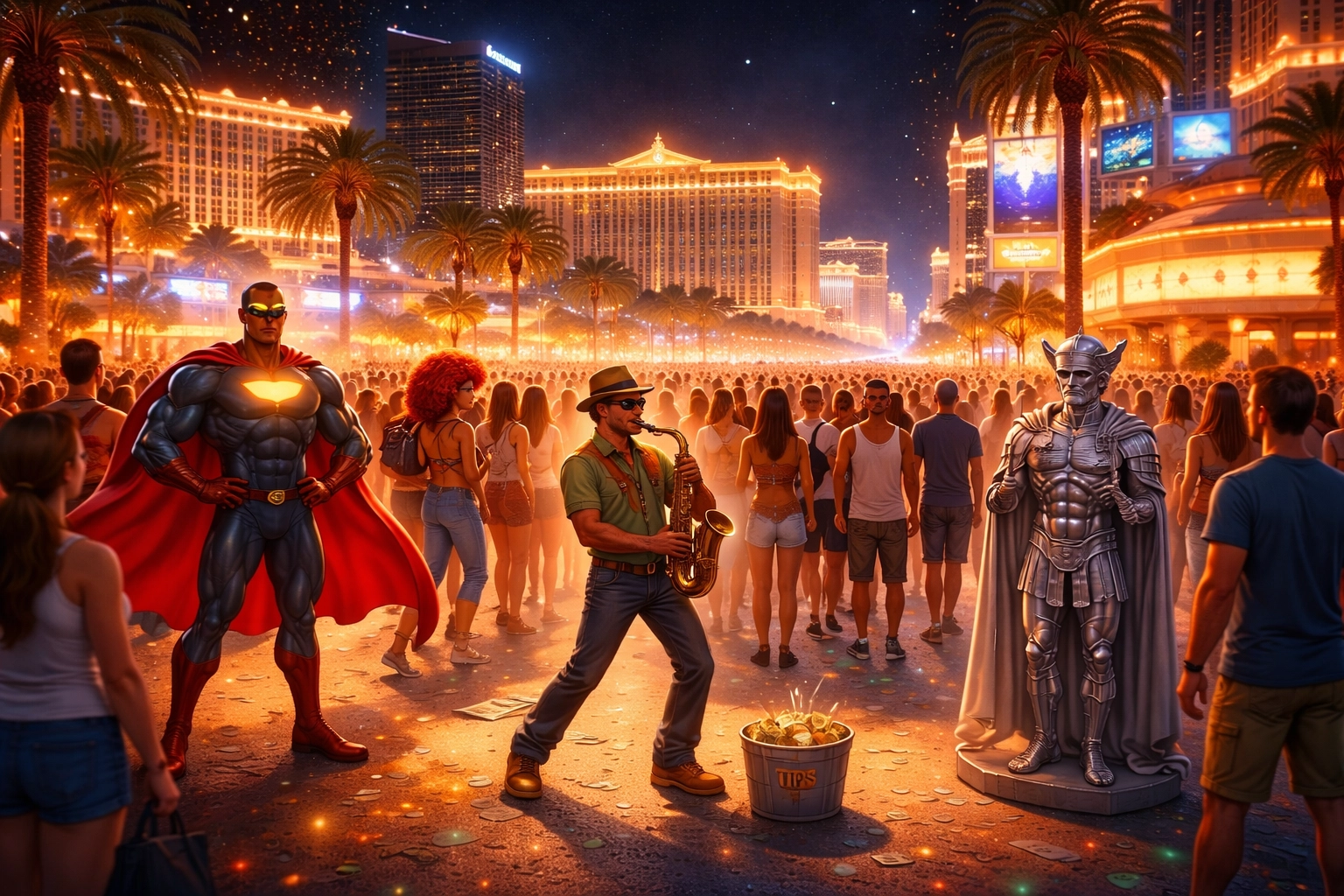
There's alcohol everywhere. Tourists everywhere. Noise, chaos, costumes, and people making questionable decisions everywhere. If we're being honest, the most sober people on the Strip are probably the street performers, the ones who actually have to stay upright, alert, and working.
Yes, something happened.
Yes, it escalated.
And yes, police responded.
That's what police are supposed to do.
But here's where the comment section crowd gets it dangerously wrong: law enforcement is not about vengeance or collective punishment. It's about restoring peace, figuring out what happened, and holding individuals accountable if they broke the law.
If someone committed a crime, charge them.
But you don't respond to an incident by arresting hundreds of people or fantasizing about water cannons, never mind the injuries, property damage, and innocent bystanders that would inevitably be caught in that mess.
Street Performance and the First Amendment
Let's be clear about something the peanut gallery conveniently ignores: street performance is generally protected by the First Amendment.
That guy dressed as Spider-Man? Protected speech.
The musician on the corner? Protected expression.
The living statue covered in silver paint? Same deal.
You might find it annoying. You might think it's tacky. You might wish the Strip looked more like a sanitized theme park. But your aesthetic preferences don't override constitutional rights.
The moment we start treating public expression as inherently suspicious, something to be controlled, contained, or eliminated, we've crossed a line that's very difficult to uncross.
When "Them" Becomes "Anyone and Everyone"
Here's the part the keyboard warriors refuse to think through.
Do you want to be arrested for walking the Strip?
Do you want to be arrested for:
- Watching a street performer
- Laughing at a joke
- Tipping someone in a costume
- Engaging with a person dressed as a monk, Mickey Mouse, or Spider-Man
Because the moment you start yelling "arrest them all," them stops meaning the problem and starts meaning anyone and everyone.
And the only possible crime committed there is infringing on intellectual property, but we’ll save that discussion for another day.
That line disappears fast.
History proves this over and over. During protests against Chile's Pinochet regime, citizens engaged in cacerolazos, pot-and-pan banging protests from apartment windows. The regime wanted to crush the dissent, but here's the problem: when millions of ordinary people participate in something, arresting them all means criminalizing the population itself.
The same principle applies here. You can't arrest everyone on the Strip at 1 a.m. without sweeping up tourists, workers, performers, and random people who just wanted to see the fountains. And if you tried, you wouldn't be demonstrating strength, you'd be exposing the absurdity of collective punishment.
Rights Exist Even When You're Uncomfortable
We live in a place where people have rights. That's not a bug, it's the whole point.
If my right to preach the gospel offends your atheist ears, move on.
If my music bothers you, don't tip and move on.
If my impersonation offends you, keep walking.
You have that right.
You also have the right to participate. The right to engage. The right to perform. The right to exist in public space without being treated like a criminal for expressing yourself.
And here's a simple solution for those clutching pearls: if you don't like crowds, cities, noise, costumes, or messy humanity, don't go to the Las Vegas Strip at 1 a.m.
The Strip has a well-earned reputation. Don't act shocked when it lives up to it. And please, settle down when you see a woman in a thong. This is not new.
How a System With Restraint Actually Works
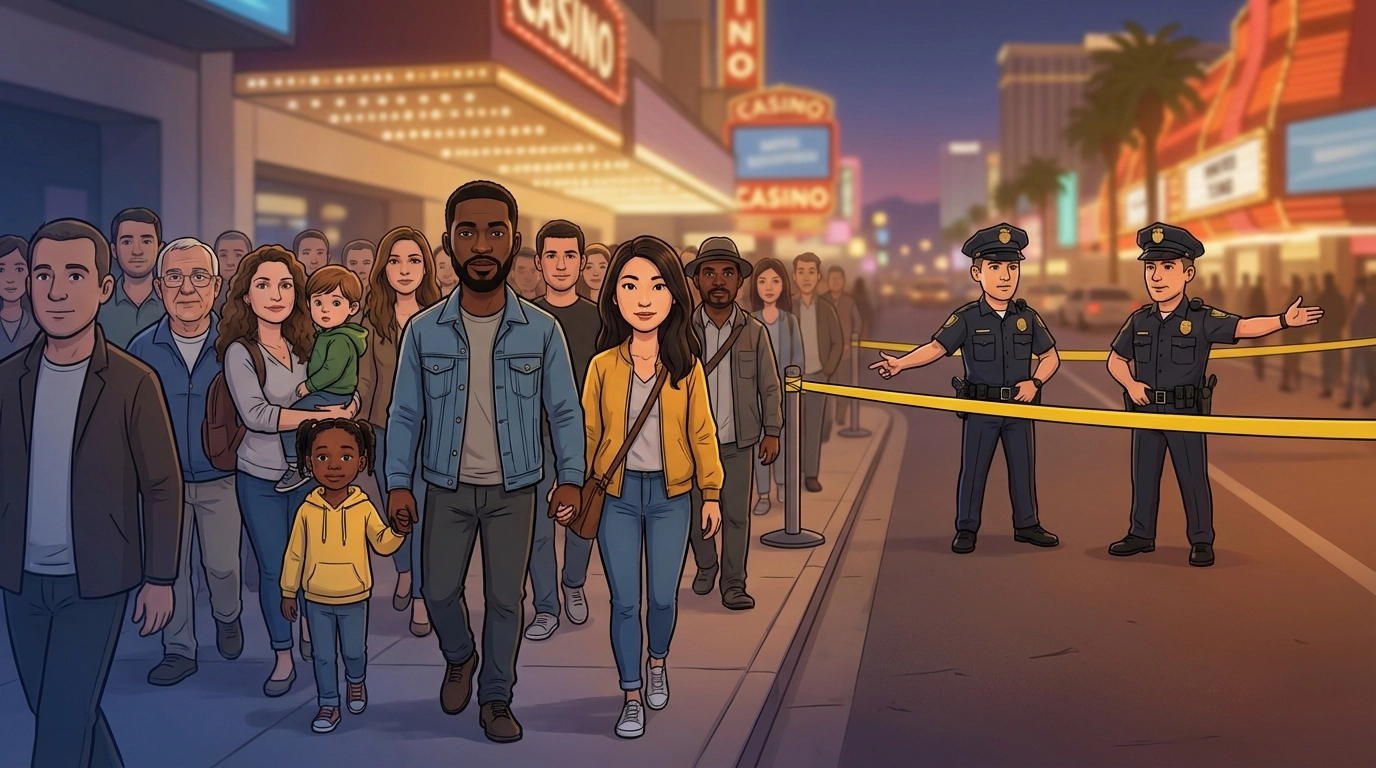
There was an incident.
It got out of hand.
Police responded.
The situation was addressed.
That's it. That's how a system with restraint works.
And we’ve already seen what happens when certain law enforcement entities overstep their bounds. It’s messy, it’s expensive, and it always lands on the wrong people first. We shouldn’t be encouraging that behavior just because we’re mad on the internet.
You don't need mass arrests.
You don't need water cannons.
You don't need to sacrifice the First Amendment because the internet is angry.
What you actually want: even if you're too caught up in outrage to articulate it: is restraint. You want law enforcement to act with judgment. You want rights to exist even when things are uncomfortable. You want a system that can distinguish between actual criminals and bystanders, between genuine threats and people just living their lives.
That requires nuance. And nuance doesn't get likes on social media.
Rights and Responsibility: Both Sides Mess This Up
Here’s the adult truth nobody wants to hold in their head at the same time: police don’t always get it right, and some people push their rights too far.
Sometimes law enforcement overreaches. Sometimes they escalate when they should de-escalate. Sometimes the wrong person gets grabbed, or the punishment doesn’t match the behavior, or the “public safety” justification becomes a blank check. We’ve all seen that movie.
And sometimes it’s not the cops. Sometimes it’s the crowd. People treating “I have rights” like it means “I can do whatever I want.” Harassing tourists. Getting in someone’s face. Turning a public sidewalk into a personal stage where nobody else matters. Rights don’t erase responsibilities. They come with them.
But none of that makes the comment-section solution smarter.
“Arrest them all” is the kind of broad-brush statement that feels fine right up until the brush swings your direction.
Because you don’t live a clean enough life to deserve that standard. Neither do I.
Have you ever done 100 mph on a freeway because you were late and feeling invincible? Ever accidentally bounced a check because you mis-timed payroll or a bill auto-drafted early? Congratulations: in the wrong place, at the wrong time, with the wrong cop on the wrong night, that’s a pair of handcuffs and a whole new set of problems.
Most of us aren’t innocent. We’re just un-caught. Or lucky. Or given grace by someone who used judgment instead of making an example.
That’s the point. We have all made mistakes. And if you want a system that treats everyone like a suspect because you’re mad today, you’re building a system that will eventually treat you like a suspect too.
So no—don’t cheer for overreach. Don’t cheer for chaos either. Call for restraint. Call for restoring order the hard way: by balancing liberties with responsibilities, and by holding individuals accountable without turning the whole crowd into “them.”
The Next "Them" Could Be You
Because the next time you shout "arrest them all," it might be your son, your daughter: or you.
Maybe your kid is downtown at a protest that turns chaotic. Maybe you're at a concert when a fight breaks out nearby. Maybe you're just in the wrong place at the wrong time, and someone with a megaphone decides that everyone in a three-block radius is a problem.
This is why we have due process. This is why we have individual accountability. This is why the Constitution exists: not to protect people we like, but to protect everyone, including people we find inconvenient.
The people demanding mass arrests never imagine themselves on the receiving end. But that's exactly who ends up there when rights stop mattering.
The Historical Warning We Keep Ignoring
History is very clear about what happens when people cheer the suspension of rights in the name of order.
It never stops with the people you don't like. It never stays contained to the "criminals" or the "agitators" or whatever label makes collective punishment feel justified. The apparatus built to control them eventually gets pointed at you.
None of us should be eager to wake up one day and realize we helped build 1930s Germany with our own outrage.
That comparison isn't hyperbole: it's a pattern. Every authoritarian system starts with popular support. Every suspension of rights begins with a compelling justification. Every "temporary" measure becomes permanent once the infrastructure exists.
Second Chances Require a System That Gives Them
At Breaking Free Industries, we talk a lot about second chances. About people who made mistakes and deserve the opportunity to rebuild. About systems that should rehabilitate rather than just punish.
But here's the thing: second chances are impossible in a system that doesn't distinguish between individuals. When you "arrest them all," you're not just punishing the person who did something wrong: you're punishing everyone nearby. You're creating a world where context doesn't matter, where individual circumstances are irrelevant, where being in the wrong place becomes a crime.
That's not justice. That's collective punishment dressed up as law enforcement.
And it's the opposite of everything we should want from a society that claims to value redemption.
The Strip will still be chaotic tomorrow night. Performers will still be out there. Tourists will still make questionable decisions at 1 a.m. And something will probably go sideways again at some point: because that's what happens when millions of people converge in one place with alcohol and very few inhibitions.
The question isn't whether incidents will happen. The question is whether we respond like a society that values rights and restraint, or like a mob that's forgotten why those things matter.
Shout-out to the Las Vegas Metropolitan Police Department for restoring order quickly and keeping the public safe without further injuries.
Now do your part: sit back, relax, and let cooler heads prevail.
Choose carefully. The system you build in anger is the system you'll live under when the anger fades.