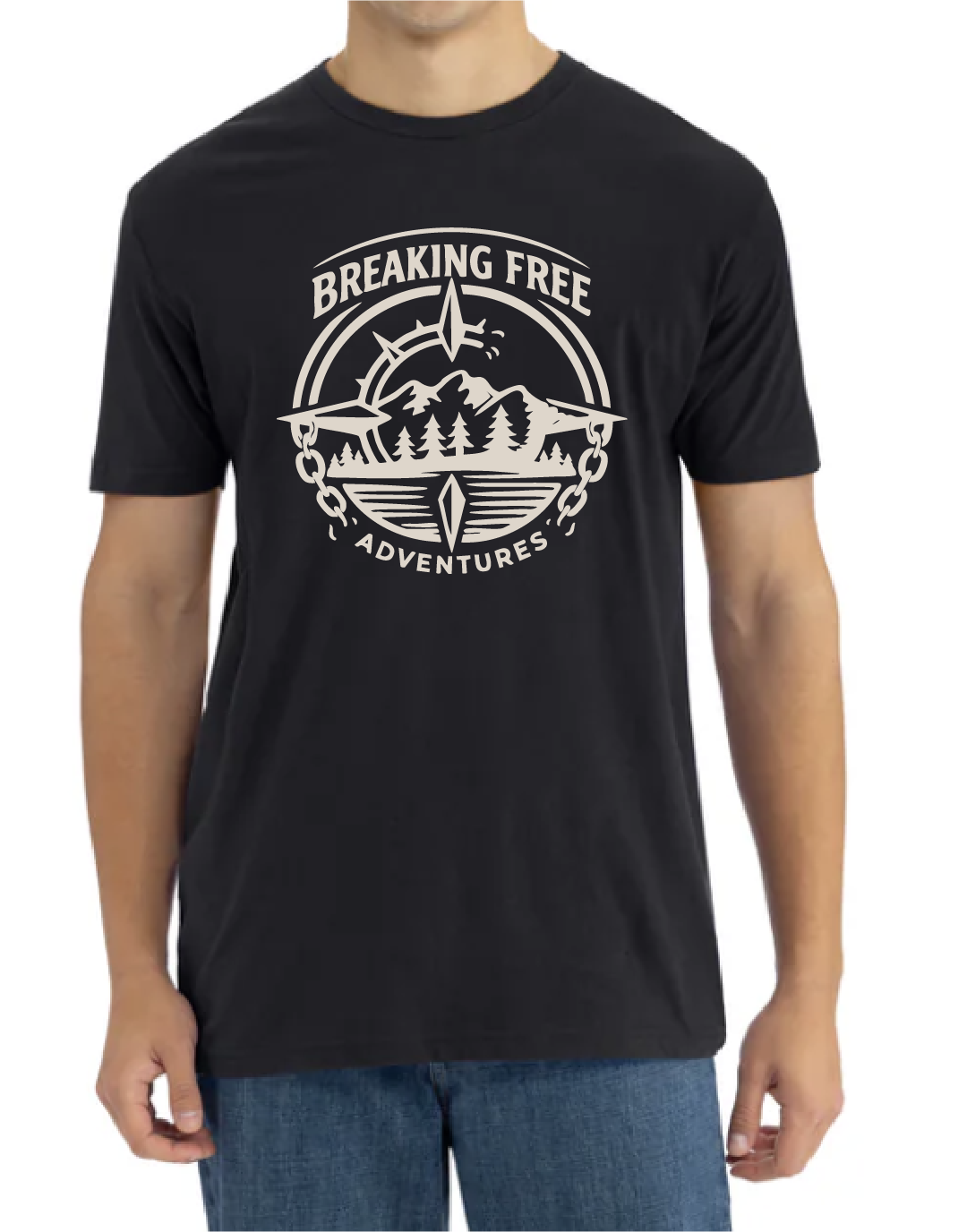
Embroidery vs. Screen Printing: The 3 Things You Actually Need to Consider
Here’s what nobody tells you about choosing between embroidery and screen printing: most people pick wrong because they’re asking the wrong questions. If you’re still deciding on the right blank for your project, start with our Midweight Tee Guide.
They obsess over price per unit. They Google “embroidery vs screen printing pros and cons” and get the same recycled listicles that don’t actually help them decide.
The real decision comes down to three factors that matter more than anything else. Once you pick your method, request a custom quote and we’ll make sure the final result looks sharp. Get these right, and you’ll nail it every time. Get them wrong, and you’ll end up with mediocre results that make your brand look amateur.
Let’s cut through the noise.
1. Design Detail: Where Dreams Meet Reality
Screen printing handles complexity. Embroidery demands simplicity.
This isn’t about preference: it’s about physics.
When you screen print, you’re laying down ink that can capture fine lines, gradients, small text, and intricate artwork. The mesh screen transfers every detail of your design with precision. You can print a photograph if you want to.
Embroidery? That’s thread being punched through fabric thousands of times. Every detail has to be translated into stitches, and stitches have limitations.
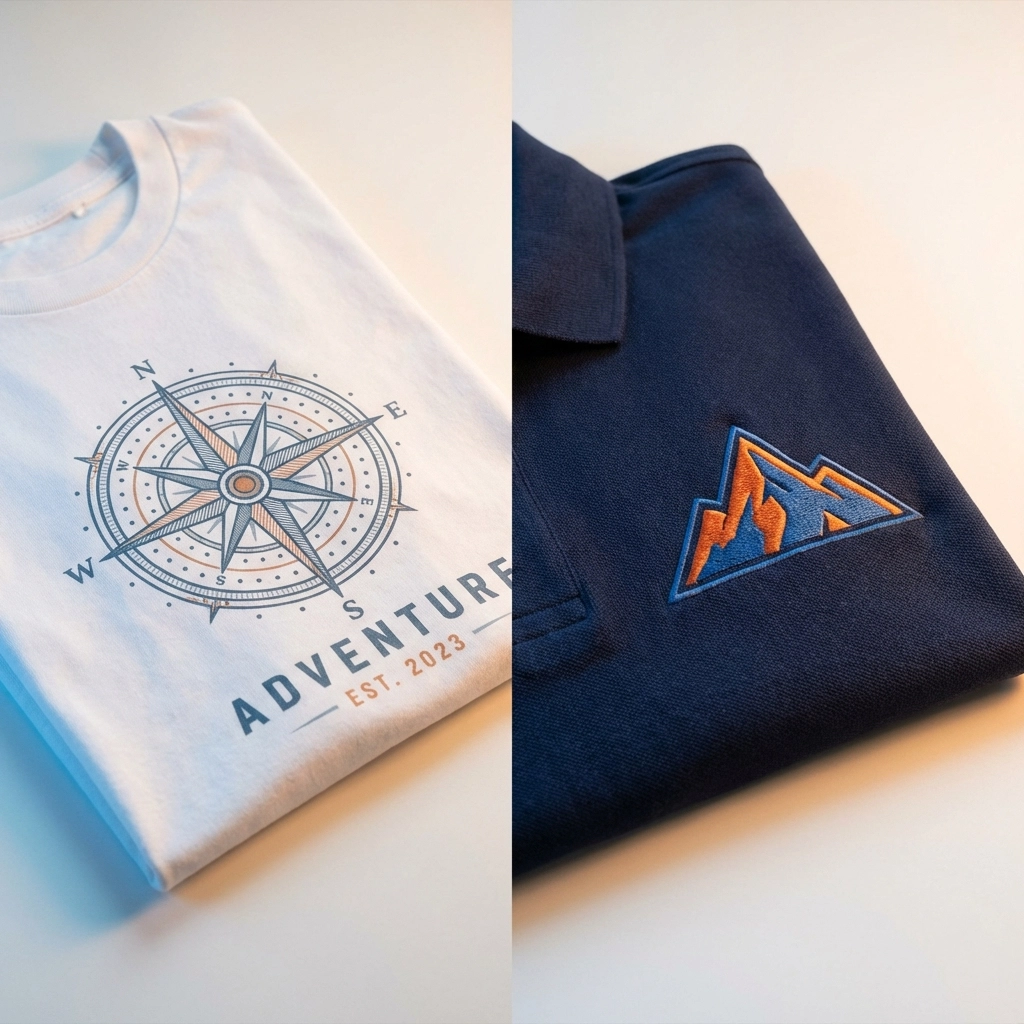
Screen printing wins when your design has:
- Fine lines and small text
- Gradients or photo-realistic elements
- Multiple colors with complex interactions
- Artwork with texture or shading
- Detailed illustrations
Embroidery works best when your design is:
- Bold and simple
- Mostly text or solid shapes
- Classic logos or monograms
- Icons without fine detail
- Designs under 4 inches wide
Here’s the harsh truth: if you force a complex design into embroidery because you think it looks “more premium,” you’ll end up with something that looks worse than if you’d just screen printed it.
The thread will simplify your design whether you want it to or not. Work with that limitation, don’t fight it.
2. Budget and Quantity: The Math You Can’t Ignore
Screen printing rewards volume. Embroidery punishes it.
Screen printing has high setup costs but low per-unit costs. You pay to create screens (one per color), then printing becomes fast and cheap. Order 500 shirts? The setup cost gets spread thin. Order 25? You’re paying premium prices.
Embroidery flips this completely. No major setup costs, but every garment takes time. Lots of time. And time costs money.
The breakeven point typically hits around 50-100 pieces. Below that, embroidery often makes sense. Above that, screen printing usually wins on cost.
But here’s where it gets interesting: embroidery charges by stitch count. A simple left chest logo might cost $3. That same logo scaled up to a full back design could cost $15+ because it requires more stitches.
Screen printing doesn’t care about size (within reason). Big design, small design: same price once the screen is made.
Real-world example: A local brewery wanted their detailed hop illustration on 200 t-shirts. Embroidery quote: $18 per shirt. Screen printing quote: $6 per shirt. They saved $2,400 by choosing the right decoration method.
3. Garment Type: Context Is Everything
Not all fabrics are created equal, and your decoration choice should match the garment’s intended use.
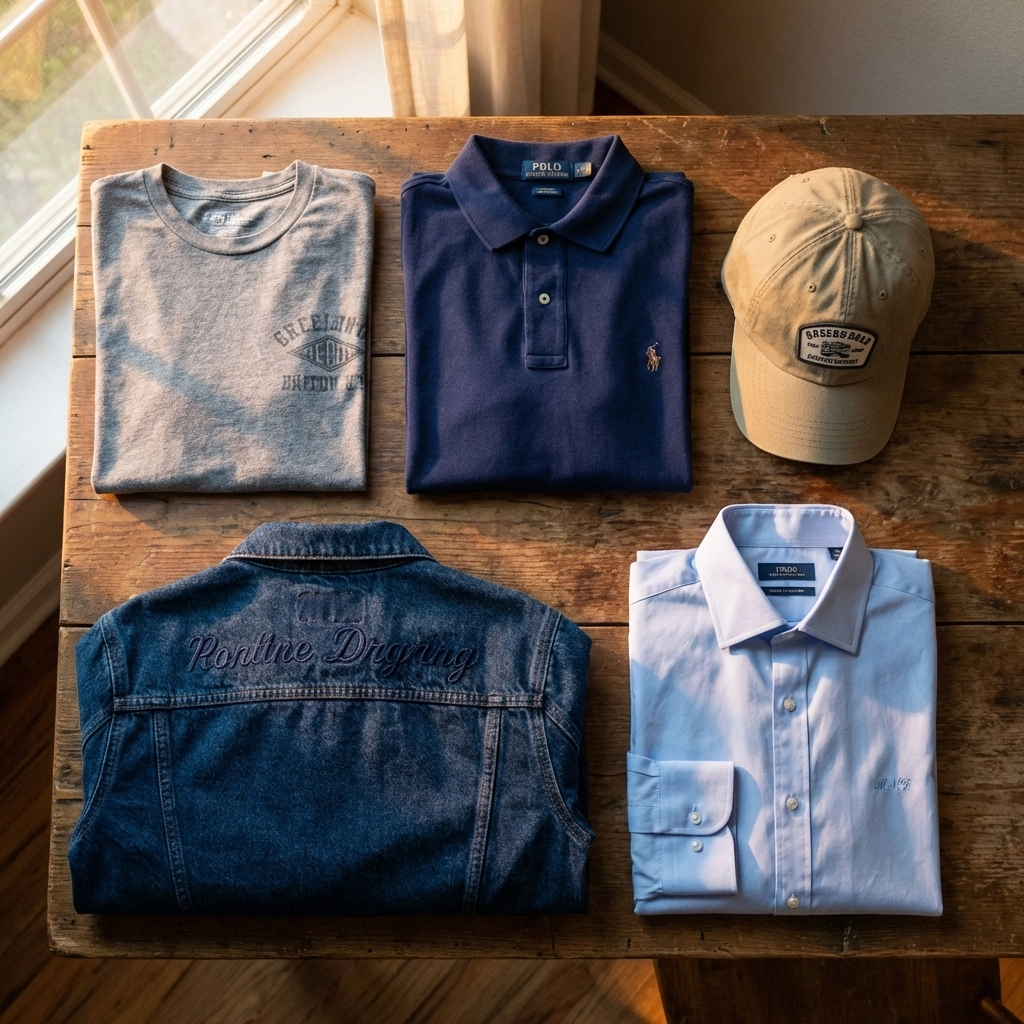
T-shirts and casual wear lean toward screen printing. They’re soft, flexible, designed for comfort. Embroidery can add bulk and stiffness that fights against the garment’s natural drape.
Polos, button-ups, and business wear favor embroidery. These garments already have structure. A stitched logo reinforces the professional appearance instead of working against it.
Hats, jackets, and heavy fabrics need embroidery. Try screen printing a baseball cap. It doesn’t work. The curved surfaces, thick materials, and structured panels require the durability and dimension that only thread can provide.
But here’s what most people miss: the garment’s color matters as much as its type.
Dark garments hide embroidery thread variations better than light ones. White thread on a white shirt shows every imperfection. White ink on a black shirt? Clean and bold.
Light garments show embroidery beautifully but can make screen printing look flat if you don’t account for ink opacity.
The Game-Changer: Faux Embroidery
Here’s where things get interesting.
Faux embroidery gives you the look of stitching without actually sewing thread into the garment. We’re talking about specialty inks that build dimension, resin treatments that mimic thread texture, and printing techniques that fool the eye.
Why does this matter?
Because it breaks the traditional rules. You can have:
- Embroidery aesthetics at screen printing prices
- Complex designs with an embroidered look
- The durability of ink with the premium appearance of thread
- Scalable decoration for garments that don’t traditionally embroider well
When faux embroidery makes sense:
- You want the premium look but have budget constraints
- Your design is too detailed for traditional embroidery
- You’re decorating performance fabrics that don’t love thread
- You need consistency across large quantities
It’s not about cutting corners: it’s about expanding possibilities.
Your Quick Decision Framework
Choose Screen Printing When:
✓ Design has fine details or multiple colors
✓ Quantity is 100+ pieces
✓ Garment is casual/soft (t-shirts, tank tops)
✓ Budget is the primary concern
✓ You need photo-realistic quality
Choose Embroidery When:
✓ Design is simple and bold
✓ Quantity is under 50 pieces
✓ Garment is structured/professional
✓ Durability is critical
✓ You want a premium, dimensional look
Consider Faux Embroidery When:
✓ You want embroidery aesthetics at scale
✓ Design is too complex for traditional embroidery
✓ Budget falls between traditional options
The Breaking Free Difference
Look, we could decorate your apparel with either method and call it a day. But that’s not how good work gets done.
We start with your actual needs: What’s this for? Who’s wearing it? What’s your real budget? What impression are you trying to make?
Then we recommend the decoration method that serves your goals, not our margins.
What sets us apart:
- Low minimums starting at just 20 pieces (most shops demand 100+)
- Sharp detail whether we’re printing or stitching
- Quick turnarounds because your deadlines matter
- Sweatshop-free sourcing from verified ethical suppliers
- Second-chance employment mission: we hire people rebuilding their lives
We’re not just decorating garments. We’re building something better: quality products, ethical practices, and second chances.
Ready to get started? Let’s talk about your project and figure out the best approach together. No hard sell, no inflated minimums: just honest advice and quality work.
Because your apparel should represent your values, not compromise them.