Quality Is the Only Rule: Why Cheap Tees Fail in 2026
Here’s the uncomfortable truth: a cheap blank isn’t worn. Period. It’s “free.” It’s “fine.” It’s “good enough.” And then it shrinks, twists, pills, feels like sandpaper, and gets demoted to pajama duty… or it gets donated. You don’t have a merch problem. You have a wearability problem.
Most branded apparel is ordered like it’s a checklist item. Somebody needs shirts for a fundraiser, a staff event, a launch, a tournament, a volunteer day. So they chase the lowest unit cost, crank out a scratchy $4 tee, hand it out, and call it “marketing.” But merch only has one real job: get worn. Not handed out. Not checked off. Worn. Because worn merch is the only kind that earns attention without you paying for it again.
Here’s the part people ignore because it makes the cheap-shirt plan look stupid: the real ROI isn’t the shirt. It’s the conversations the shirt creates. The average American has 16 conversations a day. A favorite shirt gets worn at least 8 times. That’s 128 conversation opportunities attached to one piece of fabric. Not 128 impressions in a scroll. Real life. Eye contact. “Hey, where’d you get that?” “Oh, I know that place.” “Wait, you guys do team stores?” “What does that logo mean?” Those moments are the whole game. So the brutal question isn’t “How cheap can we get these?” It’s: Is your shirt good enough to earn 128 moments?
That’s the concept we call the Mobile Billboard. A comfy, durable shirt becomes something people reach for on purpose. It gets grabbed on laundry day. It gets worn to the gym. It gets worn to Target. It gets worn on the “I don’t care” days (which is most days). And when it’s out in the world, it’s doing the job you paid it to do: carrying your brand, your nonprofit, your mission, your event, your business—into rooms you’ll never walk into yourself.
Cheap blanks don’t become Mobile Billboards. They become clutter. And that leads to what I call the Goodwill Trap: you “save” a couple bucks per shirt, then you lose the only thing that matters—wears. The shirt looks and feels like a giveaway, so it gets worn once (maybe), then it goes into the back of a drawer, then it goes into a donation bin. Nonprofits and businesses repeat this cycle constantly because “budget,” and they end up buying the same marketing over and over… except the marketing never really runs. That’s not frugality. That’s paying for a billboard and leaving it in the garage.
Spending a few dollars more per piece isn’t about turning every tee into a $100 luxury item. It’s about securing precious eyeballs that convert. Customers. Donors. Referrals. Recruits. Repeat buyers. The difference between a $4 tee and a $7–$10 tee is usually the difference between “one wear” and “this is my favorite shirt.” And the difference between “this is my favorite shirt” and “one wear” is where the money lives.
So what do you buy if you actually want people to keep it? Start with pieces that feel like real clothes, not promo gear pretending to be clothes. For hoodies, we push the Independent Trading Co. IND4000 for a reason. It’s heavyweight, it drapes right, it holds up, and it feels like something you’d buy for yourself even if there was no logo on it. It’s the hoodie people “borrow” and you never see again. It also takes decoration really well—big bold screen print on the back, clean chest hit, or embroidery when you want that premium finish.
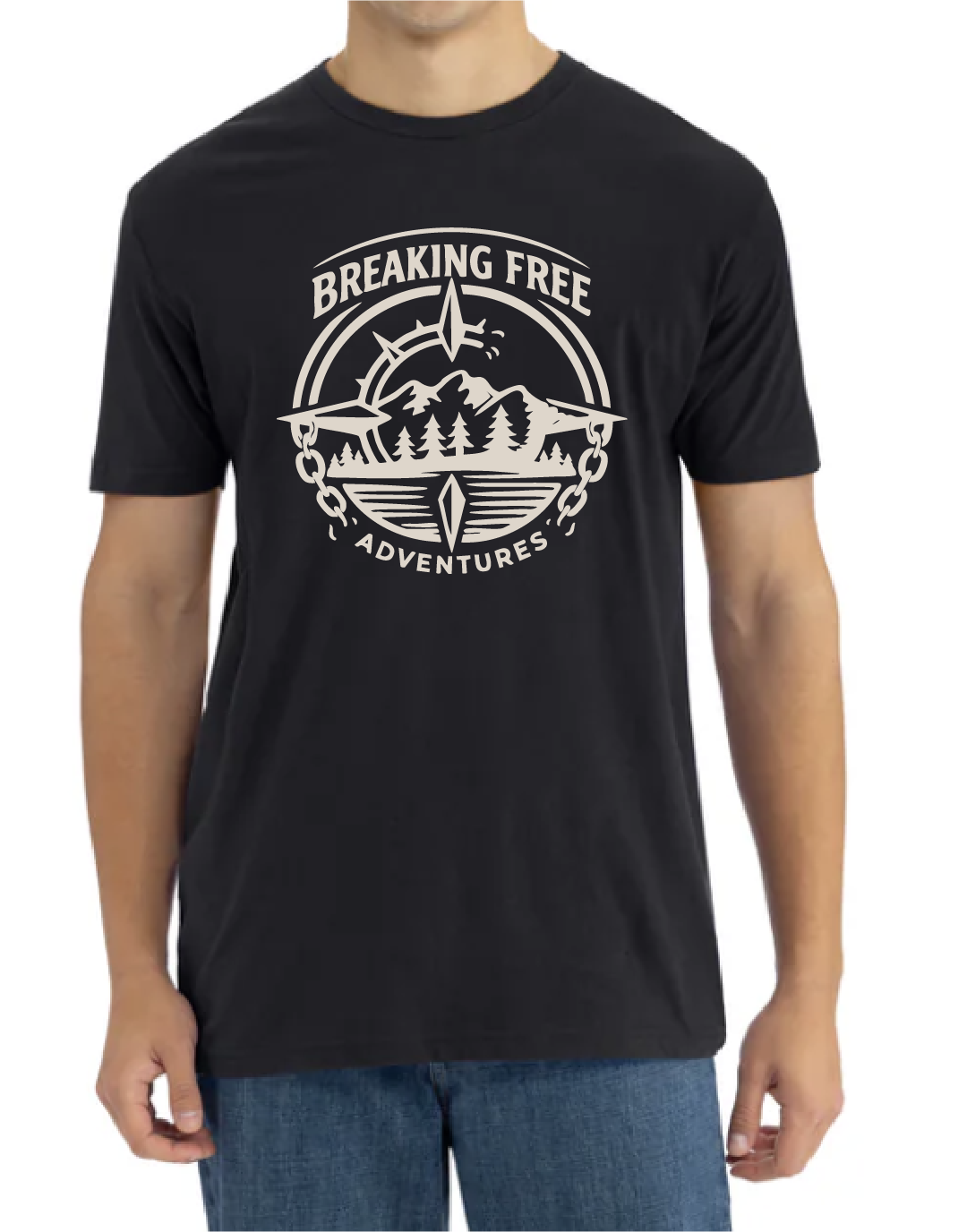
For tees, Next Level premium blanks are the easiest win in merch. The Next Level 3600 is soft without being flimsy, it fits like a modern retail tee, and it doesn’t turn into a twisted mess after a couple washes. That “retail feel” matters because it changes how people treat it. They don’t sleep in it. They wear it out. They keep it.
And for summer merch, don’t force people into a standard tee when it’s 90 degrees outside. Bella+Canvas fashion-forward tanks exist for a reason: they’re lightweight, flattering, and actually look like something someone would choose off a rack. If your audience is active, outdoors, or event-heavy, tanks aren’t a novelty—they’re the correct tool. (And yes, we also like Next Level for tank options too, depending on the fit and vibe you want.)
Now, none of this matters if ordering quality merch is a pain. That’s where we come in. At Breaking Free Industries, we keep the logistics out of your way and the quality front and center. We do custom printed t-shirts and apparel using screen printing and embroidery, plus custom stickers and on-demand team/corporate stores. We move fast—most orders ship in days—and we sweat the details so your prints look sharp and your embroidery doesn’t look like a patch from 2008.
We also don’t play the minimum-order game. No order minimums. Single-item orders are allowed. If you need one sample, one replacement, one test run before you commit, you can do that here. Quality shouldn’t be locked behind big-batch gambling.
And we take sourcing seriously. Every garment we print is ethically sourced and sweatshop-free. We work with Mission Imprintables, our preferred family-owned distributor, because relationships matter and consistency matters. (And when it makes sense, we buy directly from mills too.) Basically: you don’t get “premium feel” by accident. You get it by caring about the supply chain.
Last piece, and it’s not a slogan for us: our core mission is second-chance employment for people rebuilding their lives after conviction. But we also believe second chances aren’t limited to one type of story. They’re for the entrepreneur rebuilding after a failed launch. The nonprofit earning trust back after a rough year. The athlete who’s not done yet. The artist who stopped for a decade and finally started again. We print comeback stories into fabric every day, whether the wearer can articulate it or not.
So yeah—quality is the only rule. Because cheap blanks don’t get worn. And if it doesn’t get worn, it doesn’t work.
Ready to make merch people actually wear? See our pricing — quality blanks at fair rates.