The Ultimate Team Store Checklist: 5 Things You Must Consider Before You Launch
You’ve got a team. Maybe it’s a youth soccer league. A corporate sales department. A nonprofit with volunteers who actually want to rep your brand. And someone, probably you, said the magic words: “We should set up a team store.”
Great idea. Terrible execution waiting to happen.
Here’s the truth most platform salespeople won’t tell you: the team store industry is designed to extract maximum dollars from people who don’t know better. Monthly fees. Inventory commitments. Payment processing nightmares. And at the end of the day, you’re stuck with 47 medium t-shirts nobody ordered because you guessed wrong.
It doesn’t have to be this way.
Whether you’re running merch for a travel baseball team or outfitting your entire company, there are five non-negotiables you need to nail before you launch. Miss one, and you’re not running a team store, you’re running a money pit with a logo on it.
Let’s fix that.
1. Stop Holding Inventory (Seriously, Just Stop)
The old-school approach to team stores goes like this: estimate how many of each size you’ll need, place a bulk order, cross your fingers, and pray.
Then reality hits.
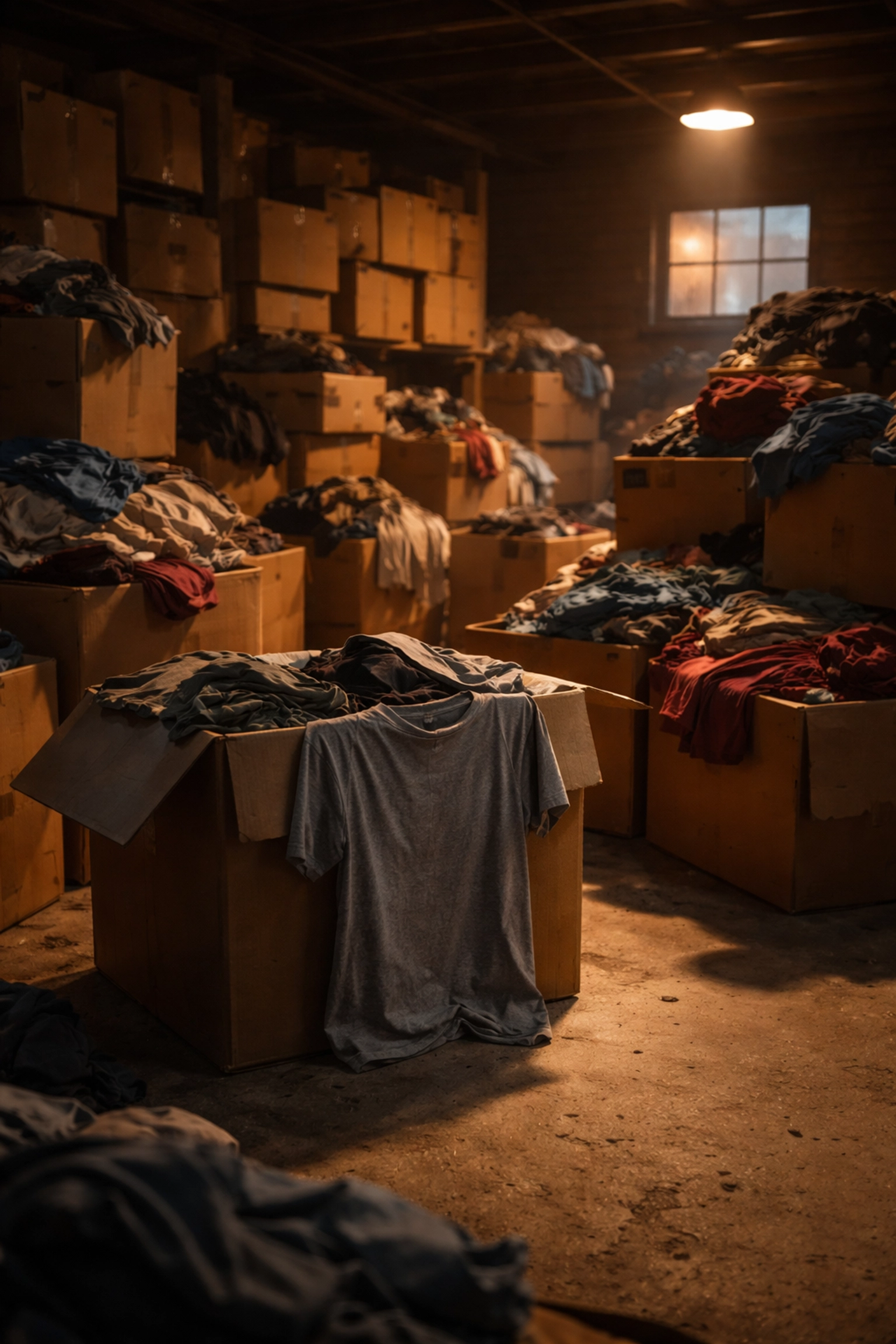
You ordered 30 larges and only sold 12. You have zero 2XLs left and six people asking for them. Now you’re sitting on dead stock that’s tying up cash you could use for, I don’t know, actually running your organization.
Inventory is not an asset. It’s a liability dressed up as preparation.
The moment you commit to holding inventory, you’re gambling. And unless you have a crystal ball that accurately predicts the sizing preferences of every person in your organization, you’re going to lose that bet.
The smarter play? Work with a print partner who can fulfill on-demand or batch orders together. You collect the orders first, then produce exactly what’s needed. Zero waste. Zero guesswork. Zero boxes of unworn shirts collecting dust in your garage.
At Breaking Free Industries, we run no minimums for team stores, so you can batch intelligently without overcommitting. You get the economies of scale without the storage unit.
2. Print on Demand vs. Order Batching: Pick Your Fighter
Once you’ve accepted that holding inventory is a trap, you’ve got two paths forward:
Print on Demand (POD): Orders come in, items get printed and shipped individually. Great for ongoing stores with unpredictable volume. The tradeoff? Higher per-unit costs and longer lead times per order.
Order Batching: You open a store for a set window (say, two weeks), collect all the orders, then produce everything in one run. Lower costs, faster turnaround for the group, and you can hit minimum thresholds for better pricing.
Neither approach is universally “right.” It depends on your situation.
Running a store for a one-time event like a company retreat or tournament? Batching makes sense. You set a deadline, collect orders, and get everything produced together.
Running an evergreen store for an ongoing team or organization? POD might work better, but only if your margins can absorb the higher per-piece cost.
The worst thing you can do is pick a model that doesn’t match your reality. A youth sports league doesn’t need a 24/7 store with next-day shipping. A corporate onboarding program might.
Ask yourself: How often do people actually need to order? Then build your store around that truth, not some fantasy of constant demand.
3. Avoid the Monthly Fee Trap
Here’s where a lot of team store platforms get you: recurring monthly costs.
$29/month here. $49/month there. “Premium features” for another $19. Before you know it, you’re paying $100+ per month for a store that sells maybe 15 items a quarter.
That’s not a team store. That’s a subscription you forgot to cancel.
Your platform should make money when you make money, not before.
Look for solutions that charge transaction fees or per-order costs rather than flat monthly subscriptions. Yes, you’ll pay a percentage on each sale. But if you sell nothing, you pay nothing. That’s how it should work.
The math is simple: if you’re paying $50/month and only selling $200 worth of merch, you’re giving away 25% of your revenue just to keep the lights on. Add in payment processing fees and you’re underwater before you’ve shipped a single shirt.

Some platforms justify monthly fees with “features” you’ll never use. Custom storefronts. Advanced analytics. Integrations with software you don’t have.
You don’t need a spaceship. You need a store that works.
4. PCI Compliance Isn’t Optional (Even If You Don’t Know What It Means)
Let’s talk about the thing nobody wants to talk about: payment security.
PCI DSS (Payment Card Industry Data Security Standard) is the set of rules that govern how businesses handle credit card information. If your team store accepts payments: and it does: you need to be compliant.
This isn’t a nice-to-have. It’s a legal and ethical requirement.
The good news: if you’re using a reputable platform with built-in payment processing (Stripe, PayPal, Square, etc.), most of the heavy lifting is done for you. The bad news: if you’re cobbling together a solution with a sketchy checkout page and manual card entry, you’re exposing your customers: and yourself: to serious risk.
Here’s what to verify before you launch:
- SSL Certificate: Your store URL should show “https” with a padlock. No exceptions.
- Payment Processor: Use established processors that handle PCI compliance on their end.
- Data Storage: You should never store full credit card numbers. Ever. If your platform does, run.
- Privacy Policy: Have one. Display it. Make sure it’s accurate. (Here’s ours for reference.)
Your coach, your HR director, your volunteer coordinator: they’re trusting you with their payment info. Don’t betray that trust because you wanted to save $10/month on a sketchier platform.
5. Your Merch Tells a Story: Make It a Good One
Here’s where most team store guides stop. They cover the logistics, the tech, the money stuff. And that’s important.
But there’s something bigger at play.
Every shirt you sell carries a message beyond the logo.
Where was it made? By whom? Under what conditions? These questions matter more than most people realize: until they realize.
At Breaking Free Industries, we work exclusively with sweatshop-free garments. That’s not marketing fluff. It’s a commitment to sourcing from manufacturers who treat workers like humans, not production units.
But we go further than that.
Our operation is built around second chances. We believe in the kind of redemption that doesn’t just apply to people coming out of incarceration: it applies to anyone rebuilding. The entrepreneur who failed and is starting over. The athlete who blew out a knee and found a new path. The artist who spent years in the wrong career before finding their thing.
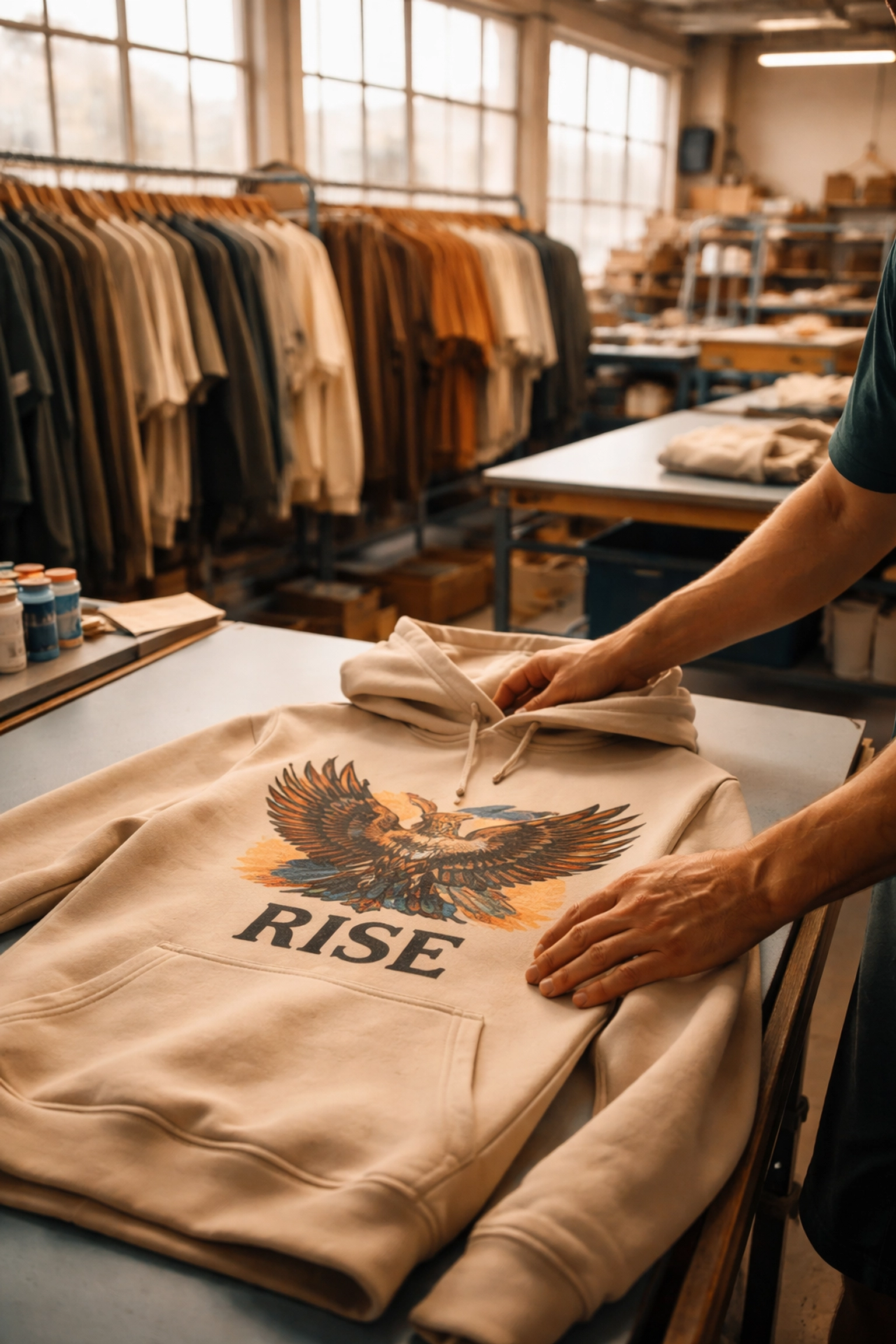
When your team buys merch from a company that embeds these values into its operations, that purchase means something. It’s not just a hoodie. It’s a statement about what your organization stands for.
You can read more about our mission in our post on why reentry starts with all of us.
Your team store isn’t just a fundraiser or a uniform solution. It’s a reflection of your values. Choose partners who reflect them back.
The Bottom Line
Setting up a team store isn’t complicated. But doing it right requires you to reject the lazy defaults the industry pushes on you.
Here’s your checklist:
- Don’t hold inventory. Produce what’s ordered, not what you hope sells.
- Choose the right fulfillment model. POD for ongoing, batching for events.
- Avoid monthly fees. Pay when you sell, not before.
- Ensure PCI compliance. Protect your people’s data like it’s your own.
- Source with intention. Your merch tells a story: make it one worth telling.
At Breaking Free Industries, we offer no minimums for team stores, sharp detail on every print, quick turnarounds, and a supply chain you can feel good about. We’re not the cheapest option. We’re the one that won’t leave you with regrets.
Ready to build a team store that actually works? Let’s talk.