
Maybe She’s Right. I Do Spend More Time Helping People Who’ve Committed Crimes.
And why that doesn’t mean I care any less about the people they’ve hurt.
I got into a little exchange on Threads recently. Nothing particularly unusual about that. Social media has become the place where nuance goes to die, and apparently I occasionally enjoy visiting the scene of the crime.
The discussion was about Governor Gavin Newsom and California’s death penalty. Someone was furious. Newsom had betrayed the voters, disrespected victims and their families, and essentially given California the middle finger.
I offered some context about how California’s death row had already changed. Then came the response: I cared more about the rights and lives of criminals than about victims and their families.
My immediate reaction? That’s bullshit.
Except I didn’t say that. I asked whether she wanted to understand why I believed what I believed. She didn’t. I decided not to push it.
I don’t know her story. Maybe she survived a violent crime. Maybe someone she loves was murdered. Maybe she simply believes deeply in punishment and accountability. I’m not going to turn somebody else’s possible pain into an intellectual exercise so I can win an argument on Threads.
But her comment stayed with me. And after thinking about it, I realized something: in a very specific way, she was right.
I Do Spend More Time Helping People Who Have Committed Crimes
There. I said it.
Through my work with Inmates to Entrepreneurs and Breaking Free Industries, I’ve devoted a meaningful part of my professional life to helping people find work, build businesses, develop skills, and establish lives after incarceration.
I believe in second chances. I believe people can change. I believe that a person’s worst decision doesn’t necessarily have to become the permanent definition of who they are.
Does that mean victims matter less? Of course not. Does it mean accountability doesn’t matter? Absolutely not.
Caring about someone and choosing where to devote your energy are two different things.
A Conversation at San Quentin I Haven’t Forgotten
Last year I visited the yard at San Quentin and spoke with a variety of the residents. Not through a television screen. Face to face.
One man told me he’d recently learned that his death sentence had been changed to life without the possibility of parole. He was grateful. Genuinely grateful.
Think about that. He wasn’t going home. He wasn’t being told that what he’d done was acceptable. He still expected to spend the rest of his life behind bars. But he was grateful to know he’d be allowed to live it.
Twenty years is a very long time to live with what you’ve done.
I’m not suggesting every person who spends twenty years in prison becomes remorseful. Some don’t. But years of reflection, programming, relationships, and confronting the harm you’ve caused can change a person.
I’ve heard people talk about their victims, about the families left behind, about praying for those families, about wishing they could go back and be somebody other than the person who did what they did.
Remorse doesn’t bring a victim back. It doesn’t erase the suffering. It doesn’t mean someone should automatically be released. But if someone is genuinely no longer the person they were twenty years ago, are we willing to acknowledge that?
Real Life Isn’t an Episode of Law & Order
There’s a victim. There’s a bad guy. The police investigate. The district attorney prosecutes. The evidence is overwhelming. The jury gets it right. Forty-two minutes later, justice has been served. Cue the closing credits.
Except real life doesn’t work that way. Police officers and prosecutors can make mistakes. Witnesses get things wrong. Evidence can be misinterpreted. Some defendants have excellent lawyers; others have overwhelmed counsel and very little money.
And yes, some people are guilty of exactly what they’re accused of. I’m not pretending otherwise.
But the categories of victim and offender aren’t always neatly separated. Some people are wrongly convicted. Some played a peripheral role in someone else’s crime. Some committed crimes after years of being victimized themselves.
A person can be responsible for causing harm and still have suffered tremendous harm. Both things can be true.
Three Felonies a Day? And the Reality of Plea Bargaining
Former CIA officer John Kiriakou served time in federal prison. He’s also discussed the argument associated with Harvey Silverglate’s book Three Felonies a Day: that criminal law has become so expansive that ordinary Americans may unknowingly expose themselves to serious criminal liability.
Three felonies. A day. Not parking tickets. Felonies.
To be clear, that’s a provocative argument about overcriminalization, not a scientifically established count of what the average American actually does. But it raises a question worth asking: do we understand how much power the government has when it decides to prosecute somebody?
Which brings me to one of my favorite courtroom movies, A Few Good Men.
Tom Cruise plays Daniel Kaffee, a young Navy lawyer who’s very good at negotiating pleas and considerably less enthusiastic about preparing for trial. He offers two Marines a deal that could get them home in six months. From his perspective, he’s practically performed a miracle. Except they refuse to admit guilt.
And Kaffee, who would really rather be playing softball, can’t understand why they won’t take it.
*A Few Good Men was inspired in part by a real incident involving Marines at Guantánamo Bay. In the incident that helped inspire the story, the assaulted Marine survived; the movie dramatized the circumstances and changed the outcome. The questions about authority, accountability and defending the accused remain.
In federal criminal cases, the overwhelming majority of defendants who are sentenced resolve their cases by guilty plea rather than trial. That doesn’t mean everyone arrested is convicted, or that everyone pleading guilty is innocent. It does mean the system runs largely on negotiated outcomes.
Imagine being offered two years if you plead guilty, but facing twenty if you go to trial and lose. Maybe you’re guilty. Maybe you’re not. Maybe you’re guilty of something but not everything charged. Either way, the decision becomes about risk as well as truth.
Competent defense counsel matters. Ethical prosecutors matter. Judicial oversight matters. I don’t think every DA is out chasing convictions at the expense of justice. But prosecutorial discretion is enormous, and efficiency isn’t necessarily the same thing as justice.
In the movie, a Marine died. Questioning the process doesn’t diminish that loss. The harm matters. The evidence matters. The process matters. And what happens afterward matters.
The Gentleman With the Walker and the iPhone
I remember a gentleman I met while speaking about entrepreneurship. He’d spent roughly twenty-five years incarcerated.
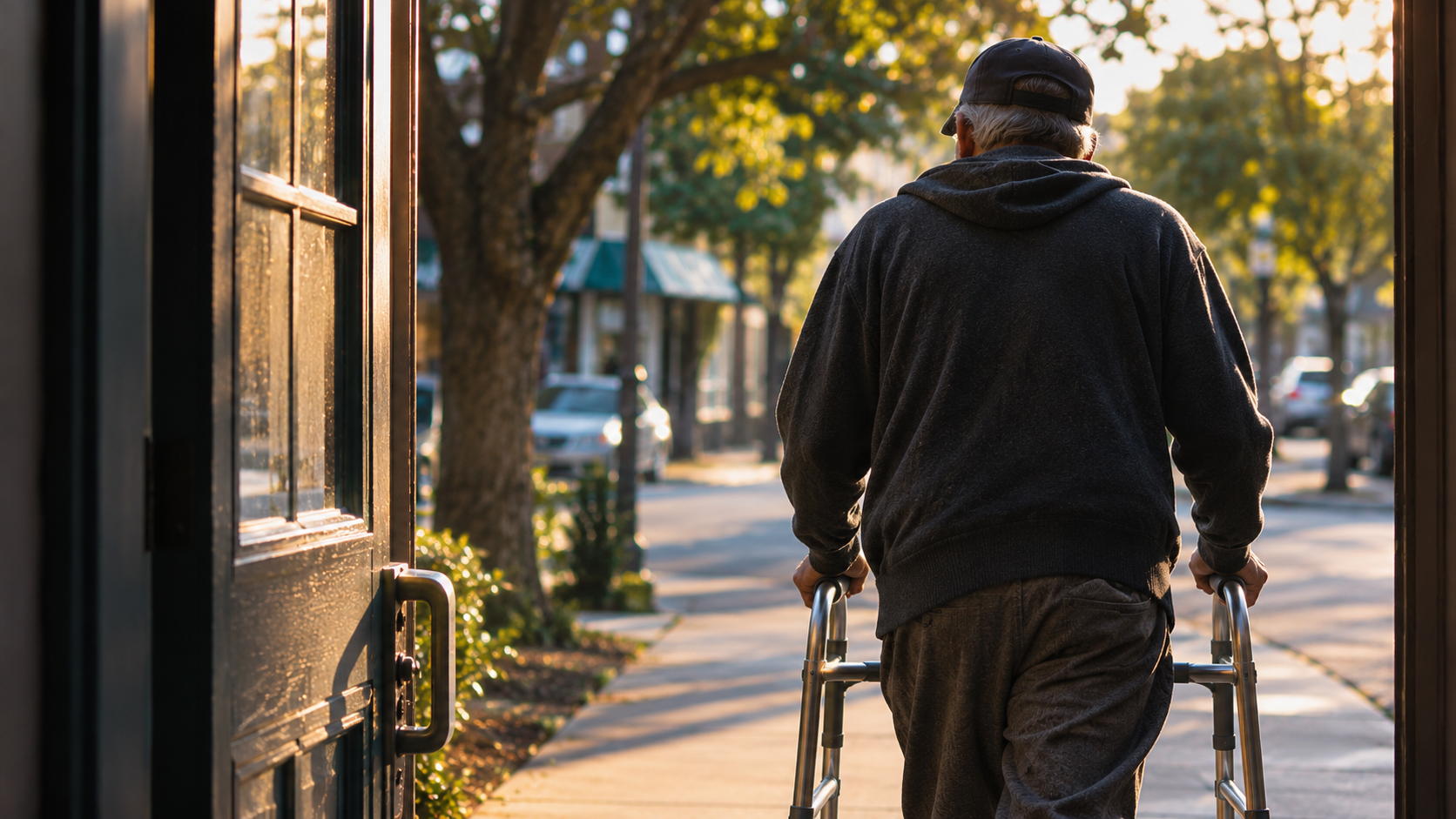
He was older, moving slowly with a walker. Gentle, kind, thoughtful. Almost grandfatherly. The sort of person you might encounter at the grocery store and exchange a few words with.
After my talk he approached me holding an iPhone. He wanted my number. Simple enough, right?
Except he wasn’t entirely sure how to enter it.
When he’d gone away, payphones were part of ordinary life and smartphones weren’t. Twenty-five years later, he was trying to navigate an iPhone.
Think about everything that changed: online banking, job applications, QR codes, two-factor authentication, social media, the disappearance of so many everyday things we once took for granted.
Now imagine being told: get a job, find housing, rebuild relationships, manage your finances, stay out of trouble, and don’t make any mistakes. Good luck!
We talk about reentry as though someone walks out of prison, changes clothes and resumes life. But I watched this gentleman struggle with something as ordinary as entering a phone number. Not because he lacked intelligence or desire. The world had moved on without him.
That’s why practical support, employment, mentorship and entrepreneurship matter. We can’t reasonably expect people to succeed in a world we haven’t helped them learn to navigate.
Here’s the Part We Keep Forgetting: Most People in Prison Are Coming Home
Whether you believe in rehabilitation, punishment, redemption, or throwing away the key, there’s a practical reality that doesn’t particularly care about your political opinions.
Most people in prison will eventually be released.
The Bureau of Justice Statistics has historically estimated that at least 95% of people incarcerated in state prisons will eventually return to society. That’s an older estimate, not a precise current census, and it isn’t interchangeable with the percentage serving life without parole. Some people will die in prison. Others are serving sentences with no ordinary release date.
But the central point remains: the overwhelming majority of people serving ordinary prison sentences are coming home. Older, hopefully wiser, and sometimes completely unprepared for the world waiting outside.
We tell them they’ve served their time, then make it extraordinarily difficult to get work. We tell them to become productive members of society, then deny them housing. We tell them to stay out of trouble, then create barriers to earning a legitimate living.
And when they struggle, we shake our heads.
For fuck’s sake, what exactly did we expect?
I’m not suggesting everyone leaving prison is prepared to succeed. Some need treatment, supervision, housing support or far more help than a job application and a motivational speech. Some will make terrible decisions again.
But if most are returning to our communities, shouldn’t we be doing everything reasonably possible to improve their chances of succeeding? Not because we’re soft on crime. Because we have an interest in what happens next.
And No, I Don’t Believe Everyone Should Be Released
Here’s where I may surprise some people.
For all my belief in second chances, I don’t believe every incarcerated person should necessarily be released into the community. Some people pose a serious, ongoing danger to others.
I’ve met people who seem unwilling to acknowledge the harm they’ve caused, who continue to rationalize destructive behavior. But I also know the limits of my observations.
I have a degree in psychology. That doesn’t qualify me to predict whether someone will reoffend, diagnose them in conversation, or decide whether they belong in an institution for life.
Lack of remorse by itself is not a reliable test of dangerousness. Mental illness alone isn’t a reason to confine somebody, either.
Still, some individuals may present serious ongoing risks despite treatment and rehabilitation efforts. In appropriate circumstances, continued incarceration under a lawful sentence or secure clinical care under applicable legal standards may be necessary. Those decisions need individualized evidence, qualified assessment, due process and meaningful review.
Prison shouldn’t become a dumping ground for people whose needs we don’t understand. And psychiatric institutions shouldn’t become a backdoor way to extend punishment indefinitely.
Rehabilitation should be the goal. Public safety has to be part of the equation. Human dignity shouldn’t disappear from either conversation.
Second Chances Aren’t Just About the Person Getting One
When someone comes home, finds stable employment, develops relationships and begins building a productive life, that benefits more than that individual. It benefits families, children, employers, neighborhoods and ultimately the rest of us.
Accountability and opportunity aren’t opposites. Meaningful accountability includes what someone does afterward. Are they working? Supporting their family? Making different decisions? Building a life that doesn’t revolve around the circumstances that brought them to prison?
Those are outcomes worth caring about. They’re the outcomes I choose to spend my time trying to improve.
What Norway Understands That We Might Learn From
I’ve long been fascinated by Norway’s approach to incarceration. Not because it’s some magical Scandinavian paradise where nobody commits crimes. And not because we could copy its prisons, paste them into California and declare victory.
But the philosophy is compelling: the punishment is the loss of liberty; incarceration shouldn’t destroy someone’s ability to live responsibly afterward.
Norwegian correctional practice emphasizes education, work, rehabilitation and preparation for release. Norway has much lower homicide rates than the United States and reports relatively low reconviction rates, though cross-country measures differ and its prison philosophy alone can’t be credited for every difference.
They still have prisons. They still separate people from society. But they ask an obvious question: what kind of person do we want returning when the sentence is over?
Can we do something similar here? I don’t know. We’d probably have to rethink much more than prison architecture. We’d have to rethink what we expect punishment to accomplish.
What About the Victims?
I can already hear the objection. What about the victims?
It’s a fair question.
A family’s grief doesn’t end with a verdict. Someone who survived violence doesn’t automatically recover because an offender has been punished. And I understand why some survivors may never want to hear the phrase second chance associated with the person who harmed them.
I don’t expect forgiveness. I don’t believe victims owe offenders reconciliation, understanding, or even a conversation.
But compassion isn’t a finite resource. We can support victims, hold offenders accountable, protect communities and help people rebuild their lives. These aren’t mutually exclusive goals.
And What About the Death Penalty?
The Threads exchange that started all this was about California’s death penalty and Governor Newsom’s commutation actions. California hasn’t executed anyone since 2006, and Newsom imposed a formal moratorium in 2019.
Changing a death sentence to life without parole is not an acquittal. It isn’t freedom. It doesn’t erase the conviction. It means a person remains incarcerated rather than facing execution. The legal status of individual commutations and required approvals matters.
I think about the man I met at San Quentin and his gratitude simply to remain alive. And I think about the families who might experience the same news as a betrayal of justice. Both perspectives deserve to be taken seriously.
But most people serving ordinary prison sentences aren’t on death row. They’re going to get out. What we do before and after that happens has consequences for everyone.
Maybe She Was Right. Just Not in the Way She Intended.
I’ve thought about that woman’s comment. Initially I wanted to defend myself, explain that she was wrong, and tell her about everything the system gets wrong.
But I don’t need to win that argument.
She may have very good reasons for seeing the world as she does. And I have reasons for seeing it as I do.
I do spend more of my time helping people who have been incarcerated. I do advocate for them. I do believe they deserve opportunities to rebuild their lives.
When I think about the man at San Quentin who was grateful simply to be alive, or that gentle older gentleman leaning on his walker and trying to figure out his iPhone, I wonder what we gain by refusing to see people as anything other than their convictions.
There are people doing extraordinary work for crime survivors. Others work to improve policing, prosecution, mental health care and public safety. There’s room for all of it.
I’ve chosen to work with people trying to find their way back.
Some have caused tremendous harm. Some were themselves victims. Some will succeed. Some won’t. And some may never be able to live safely outside a secure environment.
But the possibility of failure isn’t a good enough reason to stop trying.
Because the question isn’t simply whether someone deserves a second chance. It’s also what kind of society we want to live in when that person comes home.
Do we want people who can work, support families, contribute to communities and live responsibly? Or do we want to spend their lives reminding them that we’ll never see them as anything other than the worst thing they’ve ever done?
I know which future I’m willing to work toward.
And if that means I spend more time helping people who’ve been incarcerated than I do working directly with crime survivors, then yes. She’s right.
But that doesn’t mean I’ve chosen criminals over victims.
It means I’ve chosen where I believe I can make a difference.
And I’m comfortable with that.